


 Bullfighters
Seville and the Maestranza: the great bullfighters who made history in the temple of bullfighting
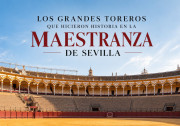 27/10/2026
Seville and the Maestranza: The Great Bullfighters Who Made History in the Temple of Bullfighting
The Real Maestranza has been the setting for unforgettable afternoons and has immortalized masters who left an indelible mark on the bullfighting history of Seville.
SEVILLE. — Some bullrings are part of history, while others become legend. The Real Maestranza de Caballería in Seville belongs to the latter category. Within its stands, across its golden-hued arena floor (*albero*), and through its iconic *Puerta del Príncipe* (Prince’s Gate), some of the most significant figures in bullfighting have shone—individuals who transformed the art of the bullfight into an expression of personality, courage, and artistry.
To speak of the great masters of the Maestranza is to recall names that defined different eras. From Juan Belmonte and Joselito—protagonists of one of the most famous rivalries in bullfighting—to Curro Romero, Pepe Luis Vázquez, and more contemporary figures, Seville has served as both a cradle and a stage for monumental moments in the bullring.
Juan Belmonte and Joselito: Two Unrepeatable Legends
Juan Belmonte revolutionized the interpretation of bullfighting with his core philosophy: to stand firm (*parar*), to temper the bull’s charge (*templar*), and to command the action (*mandar*). His personality and his unique approach to facing the bull transformed the tradition, establishing him as a benchmark for all subsequent generations.
Alongside him, Joselito "el Gallo" embodied intelligence, technical mastery, and the complete skill set of a bullfighter capable of dominating every facet of the *lidia* (the bullfight). Their rivalry—defined by mutual respect—forms one of the foundational chapters of what is known as the "Golden Age" of bullfighting.
Both remain inextricably linked to Seville, serving as symbols of an era that forever altered the history of the bullfighting tradition. Source: Real Maestranza de Caballería.
Pepe Luis Vázquez: Sevillian Elegance
Another essential name is that of Pepe Luis Vázquez, who was born in the San Bernardo neighborhood of Seville. His style of bullfighting—characterized by naturalness, intelligence, and classicism—earned him the respect of both aficionados and professionals.
He took his *alternativa* (the ceremony in which a bullfighter attains the rank of *matador*) at the Maestranza bullring in 1940, becoming one of the foremost representatives of the Sevillian school. His artistic persona and his signature way of calling the bull secured him a prominent place among the masters of the 20th century.
Curro Romero, the "Pharaoh" who captivated Seville
Few bullfighters have maintained as special a relationship with Seville as Curro Romero. The "Pharaoh of Camas" turned every appearance at the Maestranza into an event charged with anticipation.
His bullfighting—inspired and deeply personal—evoked emotions that are difficult to put into words. Between 1960 and 1980, he passed through the *Puerta del Príncipe* (Prince’s Gate) five times—one of the most iconic honors a *matador* can achieve in Seville.
His stature transcended the outcome of any single afternoon; Curro Romero became a cultural symbol of the city and one of the most beloved figures for generations of fans. Source: *Diario de Sevilla*.
Morante de la Puebla: Tradition and Personality
In contemporary bullfighting, Morante de la Puebla holds a distinguished position, noted for his personal interpretation of classical bullfighting, his mastery of the *capote* (cape), and his ability to create moments of profound artistic intensity.
His career at the Maestranza has produced many memorable afternoons. On April 26, 2023, he delivered a historic performance against the bull "Ligerito"—bred by Domingo Hernández—for which he was awarded both ears and the tail. It was a particularly significant milestone for the Sevillian bullring.
Morante represents the continuation of a tradition in which technique, creativity, and artistic expression converge to keep the bond between Seville and its great bullfighters alive. Source: *Junta de Andalucía*. A story that continues on the Sevillian bullring sands
The history of the Maestranza cannot be explained solely through statistics, the number of ears awarded, or triumphant exits carried on the shoulders of the crowd. It is also built upon the memories of the fans, the distinct personalities of the protagonists, and those afternoons that remain a topic of conversation in Seville long after the final round of applause has faded.
Juan Belmonte, Joselito, Pepe Luis Vázquez, Curro Romero, and Morante de la Puebla represent different ways of interpreting the art of bullfighting—all united by the incomparable setting of the Maestranza and their profound influence on Seville’s bullfighting culture.
For in Seville—a city where tradition and art are woven into its very identity—the *Puerta del Príncipe* (Prince’s Gate) remains far more than just a triumphant exit; it stands as a powerful symbol of the ultimate ambition for any bullfighter who dreams of etching their name into history.
The Maestranza preserves the memory of its great masters and continues to serve as the stage where each new generation aspires to claim its own chapter of glory.
Back